Invisalign®



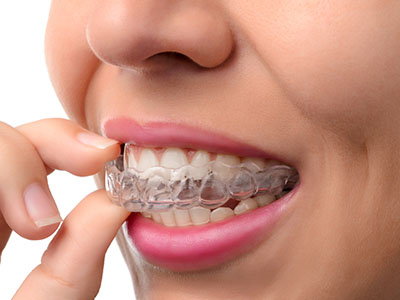
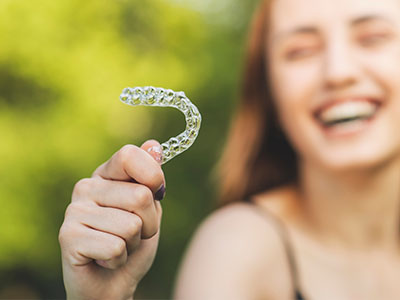
Invisalign® offers a discreet, removable way to straighten teeth using a series of custom, clear aligners. For many adults and teens, it’s a professional option that blends clinical planning with a low-profile look — letting you carry on with work, school, and social life while your smile changes gradually and predictably.

Invisalign® for Teens

Invisalign® for Brides

Invisalign® for Travelers
Before & After Photos
Invisalign® Videos
FAQs
Invisalign® vs Braces
Invisalign® vs Direct-To-Consumer Aligners
Is Invisalign® Right For Me?

Invisalign® Costs
The system relies on a planned sequence of slightly different aligners. Each aligner is worn for a prescribed period — typically one to two weeks — and applies gentle pressure that shifts designated teeth a small amount. When you move through the series, those small changes add up into the final alignment the treatment plan targets.
Planning begins with a digital scan or impression, which creates a three-dimensional map of your starting position. Clinicians use that map to simulate stages of tooth movement and to design each aligner so it produces the intended force on the right teeth at the right time.
Because the trays are removable, you can maintain your normal oral hygiene routine and eat without restrictions during treatment. Compliance matters: most patterns of care require wearing aligners for the majority of each day to achieve the planned outcome on schedule.
Invisalign® can address a wide range of alignment issues, from mild crowding and spacing to certain bite problems. A careful clinical exam — including digital scans and occlusal assessment — determines whether aligners are an appropriate option or if other orthodontic approaches are preferable.
Factors a clinician considers include the severity of the misalignment, the health of the teeth and gums, and habits such as grinding. For patients with active gum disease or untreated decay, those issues are typically addressed before beginning tooth movement to ensure a healthy foundation for orthodontic care.
Age alone is not a strict barrier: many adults and older teens find clear aligners appealing because they are less visible and, for many, less intrusive than fixed braces. During your consultation, your doctor will explain which movements are straightforward with aligners and which may require adjunctive techniques.
Your first visit focuses on assessment and planning. The doctor will take a digital scan or impression, review your medical and dental history, and discuss what you hope to achieve. Using the digital model, they’ll map out a recommended sequence of aligners and explain the anticipated timeline and key milestones.
If aligners are recommended, you’ll see a visual preview of the projected tooth positions as treatment progresses. That preview is a planning tool — it shows the intended outcome, the number of aligner steps, and the points in treatment where midcourse reviews are scheduled.
Throughout treatment, follow-up visits are focused and practical: check fit, track movement, and deliver the next sets of aligners. Your doctor will monitor progress and make adjustments if the teeth aren’t tracking as planned. This ongoing oversight helps keep treatment efficient and comfortable.
Modern aligner therapy depends on accurate scans and precise fabrication. After your digital scan, the clinician and laboratory teams translate the planned movements into a series of bespoke trays. Each tray is shaped to guide teeth incrementally toward their intended positions.
Material science and manufacturing quality affect how aligners fit and feel. Well-made aligners seat securely and apply consistent force; their edges are smoothed for comfort and attachments can be added when needed to help with specific tooth rotations or vertical movements.
Because each step builds on the previous one, predictable outcomes depend on initial accuracy and patient consistency. Routine monitoring and occasional refinements are part of the process to ensure the result matches the plan as closely as possible.

The journey begins with a thorough exam that looks beyond alignment to overall oral health. Your doctor evaluates gum condition, bite relationships, and the structural support of each tooth to confirm aligner therapy is suitable.
Digital imaging captures the current alignment and lets the clinician model potential outcomes. This is the moment to discuss aesthetic goals, timing, and any lifestyle considerations that might affect wearing your aligners.
The exam also identifies whether preparatory work — like fillings or periodontal care — is necessary before moving teeth, which ensures a healthier long-term result.
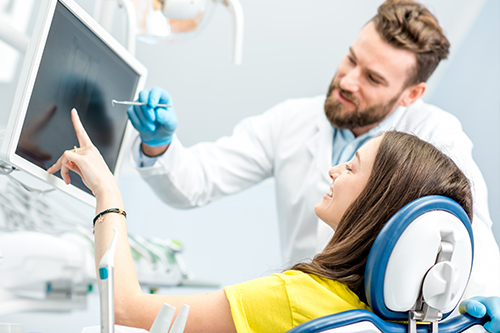
We use fast, precise digital scans to build a three-dimensional model of your mouth. That model becomes the blueprint for planning each stage of movement so the treatment can be visualized and adjusted before any trays are fabricated.
Seeing a virtual preview helps you understand how each phase contributes to the final alignment. The plan also identifies where attachments might be needed and when clinical checks should occur to verify progress.
Digital planning reduces guesswork and improves predictability — the clearer the plan, the easier it is to manage expectations and achieve the desired outcome.
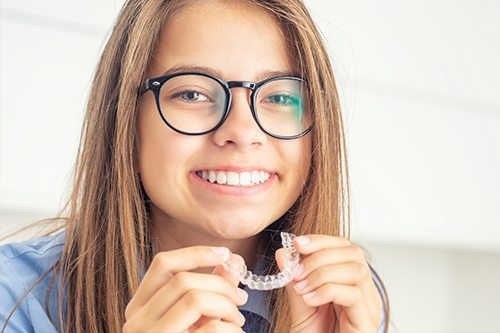
Each aligner is manufactured to the exact specifications of your plan. The trays are trimmed and smoothed for comfort and shaped to engage specific teeth in the intended sequence of movement.
Attachments — small, tooth-colored bumps bonded to selected teeth — may be used to improve grip and enable movements that would be difficult with aligners alone. Your doctor will explain their purpose and how they contribute to the mechanics of the plan.
Because trays are replaced at regular intervals, the process feels incremental: each new tray brings a small, measurable change, and patients typically notice subtle progress rather than sudden shifts.

After you receive your first set of aligners, scheduled reviews verify that teeth are tracking according to plan. These check-ins let your clinician confirm fit and make timely adjustments if refinements are needed.
When active movement is complete, retention is the next phase. Retainers — often clear and removable — help maintain your new alignment long-term. Your clinician will recommend a retention schedule based on the specifics of your case.
Consistent follow-up care protects the investment of time and effort you put into treatment and supports a stable, lasting result.
Below are video demonstrations that show aligner fit, scans, and clinical steps commonly involved in care.
*Invisalign® is a registered trademark of Align Technology, Inc.
At Alta Dental, we aim to help you understand whether clear aligner therapy fits your goals and your oral health. If you’d like to learn more about Invisalign® and how it might apply to your smile, please contact us for more information and to schedule a consultation.

There are many options for patients who want to avoid metal braces! The most popular alternative orthodontic treatment is Invisalign®, which are clear plastic aligners designed to straighten teeth. After an examination of your teeth, your dentist will determine which option is best suited to your wants and needs.
According to the Invisalign® website, the cost for treatment is approximately the same as the cost for metal braces. A portion of this cost may be covered by your insurance. Please call us to set up a consultation and discuss potential payment plan options.
The first step is to schedule a consultation with your doctor, so they can devise a treatment plan that is best suited to your individual dental needs. Once approved, you will receive your first set of aligners. Your doctor will then regularly monitor the movement of your teeth and new aligners will be ordered according to the progress made in your treatment plan.
Invisalign® aligners are made of clear, flexible plastic. The company received a patent for this material – SmartTrack® – to be used exclusively for Invisalign treatment purposes. These aligners are FDA approved and nearly invisible!
Your doctor will give you an estimate regarding how long your Invisalign® treatment should take, which will depend on your specific needs. The average length of time for treatment is approximately 12-18 months. However, some patients may see results far sooner. Remember to wear your aligners exactly as instructed by your doctor to obtain the best results.
Your doctor will most likely recommend that you wear retainers following your Invisalign® treatment. This is a precaution that will prevent your teeth from shifting back to their original positioning. It is important to follow your doctor's instructions exactly to ensure long-lasting results.
You must wear your aligners for up to 22 hours daily. You may remove them for eating, drinking and regular oral hygiene.
No. Unlike braces, you may eat whatever you like as long as you remove the aligners before eating. Prior to placing the aligners back on, it is important to brush your teeth and the aligners after you eat.
Like any orthodontic treatment, there is a short adjustment period. The more you speak with the aligners on, the quicker you will adjust.
There will be some pressure and minor discomfort for a day or two after each initial insertion. This is a sign that your teeth are moving sequentially into their final position.
It is recommended that you remove your aligners prior to chewing gum as the gum will stick to the aligners.
We discourage smoking with aligners as the cigarette smoke will tend to discolor them.
Brushing them with toothpaste will keep them fresh and clean.
Regular office visits are every five to six weeks. This will ensure that your Invisalign treatment is progressing as planned.
All orthodontic patients are instructed to wear their retainers at night indefinitely. Sleeping with your retainers in at night will ensure a healthy bite and maintain the new position of your teeth.
Yes, if their teeth, including second molars, have grown in completely.
Invisalign is a clear aligner system that straightens teeth using a series of custom-made, removable trays. Each tray is designed to move specific teeth a small amount, and you switch to the next tray on a prescribed schedule so movement occurs gradually and predictably. Digital scans and a mapped treatment plan guide the sequence so clinicians can visualize and refine each phase before fabrication.
The aligners apply gentle, controlled pressure to guide teeth into their intended positions, and attachments or elastics are sometimes used to assist with more complex movements. Because the trays are removable, you can brush and floss normally and eat without the dietary restrictions of fixed braces. Consistent wear as instructed is essential for the treatment to track according to the plan and deliver the expected outcome.
Many adults and older teens with mild to moderate crowding, spacing, or certain bite issues are good candidates for Invisalign. A clinical exam that includes digital scans, bite assessment, and evaluation of gum and tooth health determines whether aligner therapy is appropriate or whether other orthodontic approaches are preferable. Active gum disease or untreated decay should be addressed before beginning tooth movement to provide a stable foundation for orthodontic care.
Complex movements, such as large vertical changes or very severe rotations, may require adjunctive techniques or a combination of treatments that your clinician will discuss during planning. Age alone is not a strict barrier; candidacy depends on dental health, the specific movements needed, and the patient’s commitment to wearing aligners as directed. Your doctor will explain expected limitations and any alternate strategies that may achieve the desired result.
Your first visit focuses on a thorough assessment and collaborative planning. The clinician will review your dental and medical history, examine gum and tooth health, and capture digital scans or impressions to build a three-dimensional model of your starting alignment. Using that model, the doctor will simulate the proposed tooth movements and provide a visual preview of the planned outcome and the number of aligner steps involved.
The consultation also covers practical details such as likely milestones, the role of attachments if needed, and a schedule for follow-up checks to monitor progress. You should come prepared to discuss your aesthetic goals, any prior orthodontic history, and lifestyle factors that might affect compliance. After reviewing the plan, the clinician will answer questions and outline next steps if you decide to proceed with treatment.
Treatment length varies by case complexity, but many patients complete active aligner therapy in several months to around a year. The digital plan estimates the number of aligners and pacing, and clinicians schedule periodic reviews to confirm teeth are tracking as expected and to make refinements if necessary. Compliance with daily wear recommendations is a major factor in staying on schedule and achieving the projected timeline.
Certain movements can require additional refinement stages, which extend the active phase until the plan goals are met. After active alignment, a retention period begins to preserve the new tooth positions; your clinician will recommend a retainer protocol tailored to your case. Regular post-treatment check-ins help ensure long-term stability and let your provider address any minor settling early.
If you experience persistent or severe pain, loose teeth, or signs of gum inflammation, contact your clinician so they can evaluate fit and progression. Occasional rough edges or minor irritation from the tray rims can be smoothed in the office for added comfort. Good communication with your provider ensures prompt solutions and helps keep treatment on track.
Maintain a thorough oral hygiene routine of brushing twice daily, flossing daily, and rinsing as recommended to minimize plaque buildup while teeth are moving. Remove aligners for eating and drinking anything other than water, then clean them gently with a soft brush and lukewarm water to avoid warping; avoid hot water and abrasive cleaners. Keeping teeth and trays clean helps reduce the risk of staining, decay, or gum irritation during treatment.
Bring your aligners and any prescribed hygiene aids to appointments so your clinician can check fit and hygiene practices, and follow any tailored recommendations such as additional fluoride or topical treatments if your case requires them. If you use attachments, continue careful brushing around those areas to prevent plaque accumulation. Consistent care protects both your oral health and the aesthetic result of treatment.
Attachments are small, tooth-colored composite bumps bonded to specific teeth to provide better grip for the aligner and to enable certain rotations or vertical movements that aligners alone may struggle to produce. They act as handles that allow the aligner to apply force more effectively in a targeted direction, improving control over complex tooth movements. Attachments are planned during the digital treatment design and are placed and removed by the clinician as part of routine visits.
The presence of attachments does not significantly change daily care, but you should be mindful when cleaning around them and when removing aligners so you do not dislodge the bonding. Your clinician will explain their purpose, expected duration, and what to watch for if an attachment becomes loose. In many cases they are small and blend with the tooth, minimizing their visual impact while improving treatment predictability.
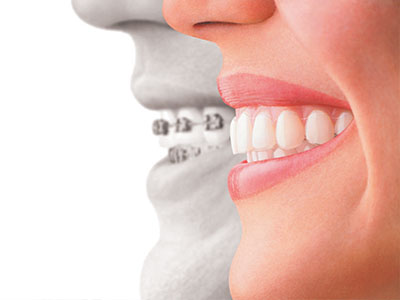
Invisalign offers a discreet, removable option that many patients prefer for aesthetics and convenience, while traditional braces use fixed brackets and wires to apply continuous force. Aligners allow for normal brushing and flossing and do not require dietary changes, but they rely on patient compliance since they must be worn for the majority of the day to be effective. Braces can sometimes be preferable for very complex tooth or jaw movements because they provide continuous, multi-directional control without the need for patient removal.
Both systems can achieve excellent outcomes when selected and managed appropriately; the choice depends on the specific orthodontic goals, the nature of the movements required, and lifestyle considerations. Your clinician will review comparative benefits and limitations during the consultation and recommend the approach that best matches your clinical needs. In some cases, a hybrid strategy or adjunctive procedures may combine elements of both for an optimal result.
When active aligner therapy is complete you will enter the retention phase, which is essential to maintain the new tooth positions and prevent relapse. Retainers—often clear and removable or bonded fixed retainers—are selected based on your case and the amount of movement that was corrected, and your clinician will provide a customized retention schedule to follow. Proper retainer use immediately after treatment stabilizes the bone and soft tissues around the teeth as they adapt to their new alignment.
Long-term retention may include nightly wear for an extended period and periodic check-ups to monitor stability and oral health. If any minor changes occur over time, timely evaluation allows the clinician to recommend conservative corrections before changes become more pronounced. Ongoing communication with your provider helps protect the investment of time and effort you placed into treatment.
To begin, schedule a consultation at our Midway or Pilsen office so a doctor can perform a focused exam and digital scan to determine whether aligners are appropriate for your case. During that visit the clinician will review your oral health, simulate a treatment plan, and explain the clinical workflow, milestones, and retention strategy so you know what to expect at each stage. Bring any relevant dental records or prior orthodontic information to help with planning and decision-making.
If you choose to proceed, the digital plan is finalized and aligners are fabricated to the prescribed sequence, with scheduled follow-up visits to check fit and progress. At Alta Dental we emphasize clear communication and careful monitoring so your treatment remains predictable and comfortable from start to finish. Contact the office that is most convenient for you to arrange a consultation and learn about next steps.
Book a visit at our Midway or Pilsen office and take the first step toward a healthier, more confident smile.